
Backup Power for a CPAP and Medical Devices
Updated 2026-08-16 · 6 min read
Gear this guide recommends
We earn a commission if you buy through links on this page, at no extra cost to you. It does not change what we recommend — see our affiliate disclosure. As an Amazon Associate I earn from qualifying purchases.
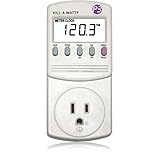
Plug-in power meter
P3 International Kill A Watt P4400
Best for: Measuring what one plug-in appliance really uses

1 kWh class
Jackery Explorer 1000 v2
Best for: First power station — fridge, phones, lights and CPAP through an outage
Jump to a section▾
Powered medical equipment turns an outage from an inconvenience into a problem with a deadline. The good news is that the most common device — a CPAP — is unusually well suited to battery backup.
How much power does a CPAP use?
A CPAP machine's blower uses modest power. The heated humidifier and heated tubing use several times more, because they're heating elements.
| Configuration | Typical draw | Overnight (8 h) |
|---|---|---|
| Blower only, no humidifier | 30–60 W | ~250–450 Wh |
| With heated humidifier | 70–120 W | ~550–950 Wh |
| With humidifier + heated tube | 90–150 W | ~700–1,200 Wh |
Turning the humidifier off is the single largest change available, and it typically doubles or triples runtime on the same battery.
Practical approach: keep the humidifier off during an outage, and accept a drier night. Many users find it tolerable for a night or two, and some pre-fill the chamber with warm water for a partial effect without the heater.
Figures vary by machine, pressure setting, and mask leak — check yours, ideally by measuring rather than assuming.
Can a CPAP run on DC power?
Many CPAP machines can run on 12 V DC with a manufacturer-supplied adapter.
This matters more than it sounds: running on DC skips the inverter, avoiding its conversion losses and its idle draw. The same battery lasts noticeably longer.
Two cautions:
- Use the manufacturer's adapter. Generic ones can damage the machine, and some manufacturers void warranty.
- Not all machines support it, and some do only for certain modes.
If your machine supports DC and your power station has a 12 V output, that's the efficient configuration.
What battery backup works for a CPAP?
A portable power station is the natural fit: silent, indoor-safe, clean sine wave output, and no CO risk. A 500–1,000 Wh unit covers a night comfortably with the humidifier off, or a night with it on at the upper end.
Look for UPS pass-through, so the machine stays on grid power and switches to battery instantly without waking anyone.
See how to size a portable power station.
A dedicated CPAP battery, sold by CPAP manufacturers and third parties, is purpose-built and often lighter. Less versatile than a general power station.
A generator works but is a poor primary answer for this specific job — it can't run indoors, it's noisy at night, and someone has to start it. It's a good secondary: recharge the battery during the day, sleep on the battery.
Higher-draw equipment
CPAP is the easy case. Others are harder:
Oxygen concentrators draw substantially more — often 300–600 W — and run continuously rather than only at night. That combination drains batteries fast, and generally means a generator for anything beyond a short outage. Portable concentrators with internal batteries are the bridge.
Ventilators vary widely; most have internal batteries for transport, with runtime specified by the manufacturer.
Powered wheelchairs and mobility devices need scheduled charging rather than continuous power — plan charging windows.
Refrigerated medication. A small dedicated cooler on a power station is far more efficient than powering the whole kitchen refrigerator.
Infusion pumps, feeding pumps, suction — check each device's own battery runtime, which is often substantial.
Building a plan
1. Know your numbers. Measure each device's actual draw with a plug-in meter, on the settings you use. Nameplate figures are maximums and often far above real consumption.
We earn a commission if you buy through links on this page, at no extra cost to you. It does not change what we recommend — see our affiliate disclosure. As an Amazon Associate I earn from qualifying purchases.
2. Decide the duration. Overnight is a different problem from four days.
3. Layer it.
- Device internal battery — minutes to hours
- Portable power station — a night or more
- Generator — days, and recharges the station
4. Register with your utility. Most maintain a medical priority or life-support list. It doesn't guarantee faster restoration, but it flags the address and usually means notice of planned outages. It's free and takes minutes.
5. Test it. Run the actual device on the actual battery for the actual duration, before you need to. Discovering the runtime is half what you expected should happen on a calm evening, not during an outage.
6. Keep it charged. A power station at 20% when the lights go out is the most common failure. Top up every few months.
7. Have a fallback. Know where the nearest facility with power is, and have a way to get there. For life-critical equipment, redundancy is the plan — not a bigger battery.
Why does medical backup need automatic transfer?
If someone depends on powered equipment, an outage while everyone is asleep is exactly the scenario to design for.
That argues for either a battery with pass-through that switches without anyone acting, or an automatic standby generator. A manual portable generator requires someone to wake, dress, go outside, and start it — see manual vs automatic transfer switch.
A note on scope
This covers the electrical side. Anything about whether a device can be interrupted, for how long, and what to do clinically if it is, belongs with the prescribing clinician or the equipment supplier — not with a power-sizing guide. Ask them what the tolerance actually is, and build the backup plan around that answer.
A unit that covers a night
The table above puts a night on the blower alone at 250–450 Wh, and a night with the humidifier and heated tube at 700–1,200 Wh. That is the 1 kWh class, and pass-through matters as much as capacity — the switchover has to happen without waking anyone. One unit that clears both:
We earn a commission if you buy through links on this page, at no extra cost to you. It does not change what we recommend — see our affiliate disclosure. As an Amazon Associate I earn from qualifying purchases.
1 kWh class
Jackery Explorer 1000 v2
The default 1 kWh station: LiFePO4, 1500 W inverter, and the brand with the longest consumer track record in the category.
Best for: First power station — fridge, phones, lights and CPAP through an outage
- Capacity
- 1,070 Wh LiFePO4
- Cycle life
- 4,000 cycles to 70%+
- AC output
- 1,500 W continuous / 3,000 W surge
- USB
- USB-C 100 W + 30 W, USB-A
- Solar input
- 400 W max
- Recharge (AC)
- 1.58 hr; 1 hr emergency mode
- UPS switchover
- <20 ms
- Weight
- 23.8 lb
- Warranty
- 3 + 2 years
- 1,500 W inverter runs a refrigerator, sump pump or microwave — the loads that matter in an outage
- LiFePO4 chemistry rated for 4,000 cycles; this is a decade-class battery
- Light enough to carry one-handed
- Not expandable — 1 kWh is what you get
- 400 W solar ceiling means a full solar recharge takes most of a sunny day
More options in every size are in the power station picks.
Where to go next
- Portable power stations explained
- Power station vs UPS
- Battery backup vs generator
- Size it properly: generator sizing calculator
More in our generator and backup power guides.
Frequently asked questions
Ask AI about this
Open an AI assistant with a question grounded in this page.