
How to Tell If You Have 100 or 200 Amp Service
Updated 2026-10-10 · 7 min read
Gear this guide recommends
We earn a commission if you buy through links on this page, at no extra cost to you. It does not change what we recommend — see our affiliate disclosure. As an Amazon Associate I earn from qualifying purchases.
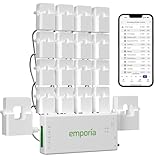
Whole-home energy monitor
Emporia Vue 3 Home Energy Monitor (16 circuit sensors)
Best for: Measuring hardwired and 240 V loads, or every circuit at once
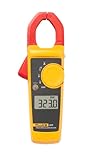
Clamp meter
Fluke 323
Best for: Measuring what a hardwired circuit actually draws, even in a crowded panel
Jump to a section▾
The number is printed on the main breaker handle, and for most homes that's the whole answer. The rest of this guide is for the panels where it isn't.
Short answer: open the panel door and find the largest breaker, set apart from the rest, usually at the top. The number on its handle, 100 or 200, is your service rating. If there's no main breaker inside, look for an outdoor disconnect next to the meter and read it there. Then confirm with the size printed on the service cable feeding the meter: for a dwelling, 4 AWG copper or 2 AWG aluminum is a 100 A service, 2/0 copper or 4/0 aluminum is 200 A (NEC Table 310.12). When the handle and the wire disagree, the wire wins, and the service is the smaller number.
Step 1: read the main breaker handle
Open the outer door of the panel. Don't remove the inner cover; the handle number is visible with the door open. The main is the one breaker that's physically separated from the rows of branch breakers, often larger, often horizontal, and switching it off kills the whole panel.
| Handle reads | What it tells you |
|---|---|
| 60 | Old small service, often a fused pull-out rather than a breaker |
| 100 | The minimum the NEC allows for a one-family dwelling (230.79(C)) and the standard for decades |
| 125 or 150 | In-between sizes, common on homes from the era when gas heat was assumed |
| 200 | The practical standard for an all-electric or electrified home |
| 225, 320, 400 | Large or multi-panel services; see 200 amp vs 400 amp service |
How a panel is laid out, and which breaker is which, is in how to read your electrical panel.
What the number means
The main breaker is the service disconnect, and its rating is the rating of the service (NEC 230.79). It protects the service-entrance conductors against overload (230.90), so it must be no larger than what those conductors can carry. The number is a ceiling on current for the whole house, not a measure of what you use.
A service has several rated parts: the meter socket, the service-entrance conductors, the disconnect, and the panel bus. Capacity is the smallest of them. That's why the breaker handle is step 1 and not the end.
No main breaker? Three cases
Main-lug panel. Rows of breakers and no single big one. The panel is fed from a disconnect somewhere else, usually a grey box outside beside the meter or a meter-main combo. The service rating is on that disconnect. The difference is explained in main breaker vs main lug.
Outdoor emergency disconnect. Since the 2020 NEC, 230.85 requires a readily accessible outdoor emergency disconnect on new or replaced one- and two-family dwelling services. On those homes the indoor panel may be main-lug, and the outdoor disconnect carries the rating. See what is a service disconnect.
Split-bus panel. An older design with a group of up to six large two-pole breakers in a top section, one of which feeds the lower section of branch breakers. There is no single main; shutting off the house means throwing all of them. This was allowed under the "six-handle rule" of NEC 230.71, which the 2020 edition changed to require each disconnect in its own enclosure or compartment. Existing split-bus panels remain legal to use. The service rating isn't on any one handle; it comes from the panel label and the service conductors, and an electrician should confirm it.
Step 2: check the service conductors
The NEC lets single-phase dwelling services use conductors sized at 83% of the service rating, because a house never runs all its loads at once. Table 310.12 (Table 310.12(A) in the 2020 edition, 310.15(B)(7) before that) turns that into specific sizes:
| Service rating | Copper | Aluminum or copper-clad aluminum |
|---|---|---|
| 100 A | 4 AWG | 2 AWG |
| 125 A | 2 AWG | 1/0 AWG |
| 150 A | 1 AWG | 2/0 AWG |
| 200 A | 2/0 AWG | 4/0 AWG |
Most residential service cable is aluminum, so 2 AWG aluminum means 100 A and 4/0 aluminum means 200 A. The table applies where the conductors carry the whole dwelling load and no ampacity adjustment applies; services above 400 A, and conductors in high ambient temperatures, are sized differently.
Where to read the size without opening anything: the jacket print on the service-entrance cable where it runs down the wall to the meter on an overhead service, or where it leaves the meter for the panel. The print repeats along the cable and includes the size, such as "2 AWG AL" or "4/0 AL." On an underground service the conductors are in conduit and the print is inside the meter socket, which is sealed by the utility and off limits. What's inside each piece of equipment is in meter socket and service entrance explained. Trace the cable that comes from the meter: 4/0 aluminum is also a common subpanel feeder, so a 4/0 cable leaving a panel proves nothing about the service.
Step 3: the meter base and the fuse box
Meter socket. Residential sockets carry a continuous rating on the label inside, commonly 100 A, 125 A, 200 A or 320 A. It's another ceiling: a 200 A socket on a 100 A disconnect is still a 100 A service, and a 100 A socket under a 200 A breaker is a problem. The label is inside the sealed enclosure, so this is a question for the electrician or the utility.
Fused services. Older homes have a fuse panel instead of breakers. The service rating is the rating of the main pull-out block, usually two cartridge fuses. 60 A is typical, and some have 100 A; either way the service predates most of today's loads.
When the handle and the wire disagree
| What you find | What it means | What to do |
|---|---|---|
| 200 A main, 4/0 aluminum from the meter | A 200 A service | Nothing |
| 200 A main, 2 AWG aluminum from the meter | The breaker is bigger than the wire can carry; the wire is unprotected | Electrician; this is a 230.90 violation, not a 200 A service |
| 100 A main, 4/0 aluminum from the meter | A 100 A service on wire sized for 200 A | Upgrade may be only a disconnect and meter socket; still a load calculation and a utility review |
| 100 A main in a panel labeled 200 A bus | A 100 A service in a larger panel | The service is 100 A until the disconnect and conductors change |
| Main-lug panel, 150 A outdoor disconnect | A 150 A service | Nothing |
| Split-bus, no main | Rating isn't on a handle | Electrician reads the label and conductors |
The panel's label and the main breaker are easy to change; the conductors and the utility's service are not. Any upgrade decision starts from the smallest number in the chain, and the upgrade itself is covered in 100 amp vs 200 amp electrical panel and electrical panel upgrade cost.
What the utility bill and the meter won't tell you
The meter measures kilowatt-hours. Some bills show a peak demand in kilowatts, which answers a different question (how much of your service you use), not the service size. The utility keeps a record of the service it connected and can confirm it, but what's inside your house is yours to verify.
Why it matters for an EV charger or a heat pump
A Level 2 charger, a heat pump with backup heat strips, an electric range, a dryer and a water heater each take a large share of a 100 A service. Whether they fit together is decided by an NEC Article 220 load calculation, which applies demand factors to the loads you actually have. Run it with the home electrical load calculator, and see how the math works in how to do a home electrical load calculation.
Two measurements make that calculation honest instead of theoretical:
- A snapshot. A clamp meter around one service conductor reads the current the house is drawing that moment. The service conductors are inside the panel, so this reading belongs to the electrician during the visit; ask for it with the big loads running.
- A record. A whole-home energy monitor clamps current sensors on the same conductors, installed by the electrician, and logs demand in its app. A few weeks of data shows the real peak, which is what NEC 220.87 lets an electrician use when adding load to an existing service.
We earn a commission if you buy through links on this page, at no extra cost to you. It does not change what we recommend — see our affiliate disclosure. As an Amazon Associate I earn from qualifying purchases.
Why is this electrician work?
Reading the handle and the cable print is safe. Everything else, the meter socket label, the bus rating, the conductor size at the lugs, a clamp reading, is behind a cover with live parts, and the line side of the main breaker is energized even with the main off. A licensed electrician confirms the service size in minutes, and the AHJ and utility have the final say on any change to it.
Standards and code reference
The standards behind this guide, for looking up in the edition your jurisdiction has adopted:
- NEC 230.79: service disconnect rating; (C) minimum 100 A, 3-wire, for a one-family dwelling
- NEC 230.90: overload protection of service conductors by the service disconnect's overcurrent device
- NEC 230.71: number of service disconnects; separate enclosures since the 2020 edition
- NEC 230.85: outdoor emergency disconnect for one- and two-family dwellings (2020 edition onward)
- NEC 310.12 and Table 310.12: single-phase dwelling service and feeder conductors at 83% of the rating, 100 A through 400 A (Table 310.12(A) in 2020; 310.15(B)(7) in earlier editions)
- NEC Table 310.16: conductor ampacities used when 310.12 doesn't apply
- NEC 230.42: minimum size and ampacity of service-entrance conductors
- NEC Article 220, including 220.82 and 220.87: dwelling load calculations and the existing-load option
- NEC 110.3(B): equipment installed and used per its listing and labeling, including meter socket and panel ratings
Code editions and local amendments vary. Confirm the adopted edition with your AHJ, and treat manufacturer instructions as governing wherever they are more restrictive.
Where to go next
- Decide whether to upgrade: 100 amp vs 200 amp electrical panel
- What the upgrade involves: electrical panel upgrade cost
- How to read your electrical panel
- Adding a charger: panel upgrade for EV charging
- Run the numbers: home electrical load calculator
More in our electrical panel guides.
Frequently asked questions
Ask AI about this
Open an AI assistant with a question grounded in this page.