
Service Upgrade vs Panel Replacement: Which Do You Need?
Updated 2026-08-16 · 6 min read
Gear this guide recommends
We earn a commission if you buy through links on this page, at no extra cost to you. It does not change what we recommend — see our affiliate disclosure. As an Amazon Associate I earn from qualifying purchases.
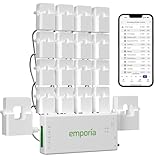
Whole-home energy monitor
Emporia Vue 3 Home Energy Monitor (16 circuit sensors)
Best for: Measuring hardwired and 240 V loads, or every circuit at once
Jump to a section▾
Both get quoted as "a panel upgrade". They're different jobs with different scopes, timelines, and costs, and comparing quotes that describe different ones is how people end up confused about a factor-of-three price spread.
What is a panel replacement?
The enclosure and breakers come out, new ones go in, existing circuits are reconnected. Service size unchanged.
What stays as-is: service conductors, meter base, mast, and usually the utility's involvement entirely.
Why you'd do it:
- The panel is unsafe or showing warning signs — see signs your electrical panel is failing
- It's a brand with a documented failure history — Federal Pacific Stab-Lok or Zinsco
- Listed replacement breakers are no longer available
- It's full, and you want more positions in the same footprint
Scope: one day, often no utility disconnect, permit and inspection still required.
What is a service upgrade?
The amperage increases — typically 100 A to 200 A. That cascades through everything upstream:
- New service-entrance conductors sized for the new rating
- New meter base, usually
- New mast or riser, often, for overhead services
- Grounding electrode system brought to current requirements
- Utility disconnect and reconnect, scheduled by them
Plus a new panel, since the old one isn't rated for the new service.
Why you'd do it:
- The calculated load exceeds or approaches the existing service
- You're electrifying broadly — heat pump, EV charger, induction range, heat pump water heater
- The existing service is below the 100 A minimum for a dwelling
Scope: one to two days of work, utility scheduling that frequently dominates the calendar, higher cost by a wide margin.
Side by side
| Panel replacement | Service upgrade | |
|---|---|---|
| Service size | Unchanged | Increased |
| Service conductors | Reused | New |
| Meter base | Usually reused | Usually new |
| Mast / riser | Reused | Often new |
| Utility involvement | Often none | Required |
| Grounding review | Sometimes | Nearly always |
| On-site time | ~1 day | 1–2 days |
| Calendar time | Short | Longer — utility scheduling |
| Relative cost | Lower | Substantially higher |
Do you need a service upgrade or a new panel?
Two independent questions. Answer both.
Is the panel itself a problem?
Yes if: warning signs are present, it's an FPE Stab-Lok or Zinsco, breakers are unavailable, or there's water damage. Any of these means replacement, regardless of capacity.
Is the service too small?
This is a calculation, not an impression. NEC Article 220 applies demand factors because your appliances never all peak together.
Run it with the home electrical load calculator, or work through how to do a home electrical load calculation.
- Well under the service rating → no service upgrade needed
- At or over → service upgrade, or load management, or a smaller version of the load
Combine the two answers:
| Panel bad? | Service small? | Job |
|---|---|---|
| No | No | Neither — maybe a subpanel if you need positions |
| Yes | No | Panel replacement |
| No | Yes | Service upgrade |
| Yes | Yes | Service upgrade with new panel |
Does a full panel mean you need an upgrade?
A full panel is a space problem. It's routinely misdiagnosed as a capacity problem, and the misdiagnosis is expensive.
If the calculation shows spare capacity, the answers are:
- Tandem breakers where the panel is listed for them
- A subpanel — cheap, no utility, no meter base, no service conductors
Neither requires touching the service. See how many circuits can a panel hold.
Doing both at once
If your panel needs replacing and your calculation says you'll exceed the service within a few years of planned electrification, do it once. The labor overlaps heavily — the panel is coming off the wall either way — and the incremental cost of upsizing at that moment is far below doing a second project later.
If the calculation doesn't say that, upsizing is buying capacity you don't need. Note that a larger service costs nothing extra per month — it's a one-time installation cost, not an ongoing one — so the question is purely whether the installation cost is worth the option value.
How do you compare panel upgrade quotes?
Before you compare numbers, confirm all three contractors are quoting the same job. Ask each to state on the quote:
- New service size and panel spaces
- Whether service conductors, meter base, and mast are included
- Grounding electrode work
- Count and type of AFCI/GFCI/dual-function breakers
- Permit fees and who pulls it
- Utility coordination — who schedules
- What happens if pre-existing conditions are found
See electrical panel upgrade cost.
Where to go next
More in our electrical panel guides.
Frequently asked questions
Ask AI about this
Open an AI assistant with a question grounded in this page.