
What Is a Breaker Box? Every Part Explained
Updated 2026-08-16 · 7 min read
Gear this guide recommends
We earn a commission if you buy through links on this page, at no extra cost to you. It does not change what we recommend — see our affiliate disclosure. As an Amazon Associate I earn from qualifying purchases.
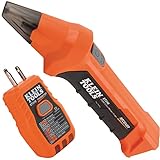
Circuit breaker finder
Klein Tools ET310
Best for: Labeling a panel without two people and a lot of shouting
Jump to a section▾
Every watt of electricity your home uses passes through one metal box. Lights, outlets, the furnace, the water heater, an EV charger — all of it flows through the electrical panel first. It's the point where the utility's supply stops being one big feed and becomes dozens of individual, separately protected circuits.
Understanding it isn't about doing your own electrical work. It's about being able to read your own house: to know whether the panel is full, whether it's sized for what you want to add, and whether what an electrician tells you makes sense.
What does the panel actually do?
Two jobs, and only two:
- Distribution. It splits one large incoming supply into many smaller branch circuits, each running to a different part of the house.
- Protection. It gives every one of those circuits an overcurrent device — a breaker — that disconnects the circuit before the wire feeding it can overheat.
That second job is the one people misunderstand. A breaker does not protect appliances, and it does not primarily protect people. It protects the wire in the wall. A 15-amp breaker exists because the 14-gauge wire behind it can safely carry 15 amps, and something has to stop the current before the wire gets hot enough to start a fire inside a stud bay where nobody can see it.
How power gets to the panel
Power arrives from the utility as two energized conductors and one neutral — a split-phase 240-volt service, the standard for US homes. Measure between either energized conductor and neutral and you get about 120 volts. Measure between the two energized conductors and you get about 240 volts.
That's why your house has both. Lights and standard outlets use one conductor and the neutral: 120 volts. Dryers, ranges, water heaters, EV chargers, and central air use both conductors: 240 volts.
Before the panel, the supply passes through the utility's meter, which measures consumption. Everything upstream of the meter belongs to the utility. Everything downstream — including the panel — belongs to you, which is why a panel upgrade is your expense and a failed transformer is not.
What's inside the box
Open the outer door and you see breaker handles in two columns. Behind the inner cover, which should only ever come off for a qualified electrician, sits the rest:
| Part | What it does |
|---|---|
| Main breaker | Single switch that disconnects the entire panel. Its rating is your service size. |
| Main lugs | Where the incoming service conductors land. Energized even with the main off. |
| Bus bars | Two vertical metal bars carrying the two energized conductors down the panel. Breakers clip onto them. |
| Branch breakers | One per circuit. Rated to match the wire it protects. |
| Neutral bar | Where white circuit neutrals land, returning current to the source. |
| Ground bar | Where bare or green equipment grounds land, giving fault current a path back. |
| Deadfront | The inner cover with the breaker cut-outs. The only thing between you and live bus. |
The two bus bars alternate down the panel — one slot pulls from bus A, the next from bus B. That alternation is why a double-pole breaker (for 240-volt loads) takes two adjacent slots: it needs to touch both bars at once.
Circuits, and why yours are split up the way they are
A branch circuit is one breaker, one run of wire, and everything on it. Your house has some mix of:
- General-purpose circuits — bedroom and living-room lights and outlets, usually 15 or 20 amps, several rooms sharing one circuit.
- Small-appliance circuits — the kitchen counter receptacles. The NEC requires at least two dedicated 20-amp circuits for these, because a kettle and a toaster on one circuit will trip it.
- Dedicated circuits — a single appliance alone on its own breaker: dishwasher, disposal, microwave, furnace, washer.
- 240-volt circuits — dryer, range, water heater, AC condenser, EV charger. Double-pole breakers.
If you've ever wondered why the hallway light goes out when the bathroom heater trips, this is why: they share a circuit.
Service size vs. panel spaces
These are the two numbers that matter, and they are independent.
Service size is the total current the panel can deliver — the number on the main breaker. Since the 1970s, 100 amps has been the minimum for a single-family dwelling under the NEC, and 200 amps is the modern default for a new build.
Spaces are the physical slots for breakers. A panel might be rated 40 spaces / 40 circuits, or 20 spaces / 40 circuits (meaning tandem breakers are permitted in some positions).
You can be out of one and not the other:
- Full panel, spare capacity. Every slot used but the house draws well under its rating. Fix: a subpanel, or tandem breakers where the panel is listed for them. No service upgrade needed.
- Empty slots, no capacity. Room for breakers but the calculated load already approaches the service rating. Adding a 50-amp EV circuit here needs a service upgrade or load management, not just a breaker.
Which one you're facing is answered by a load calculation — an NEC Article 220 exercise that adds up your home's demand using standardized assumptions rather than guesswork. Our home electrical load calculator walks through it, and the 100A vs 200A panel guide covers what each size realistically supports.
Fuses instead of breakers
If your house has screw-in fuses rather than breaker handles, you have a fuse box — the pre-1960s equivalent. Fuses do the same job by melting a metal element instead of tripping a mechanism.
A fuse box isn't automatically dangerous, and there's no code requirement to replace a working one. But it is almost always undersized for a modern household, usually 60 amps, and it has a specific failure mode: someone screws a 30-amp fuse into a socket protecting 15-amp wire because it kept blowing. The fuse stops blowing. The wire keeps heating. Most fuse boxes get replaced during a service upgrade for capacity reasons long before anything else forces the issue.
What you can safely do yourself
Without removing anything:
- Turn breakers on and off. To reset a tripped breaker, push the handle firmly to full OFF, then back to ON. Halfway doesn't reset it.
- Read and correct the directory. Knowing which breaker kills which room is genuinely useful in an emergency, and the NEC requires the directory to describe each circuit's specific purpose.
- Look for obvious problems. Rust, water staining, a burning smell, scorch marks, warmth in the panel door, or a persistent buzz all justify a call to an electrician.
What requires a licensed electrician: anything behind the deadfront. The main lugs remain energized with the main breaker off, and there is no homeowner-accessible way to de-energize them — that switch is on the utility's side of the meter.
Where to go next
- Sizing an upgrade: 100-amp vs 200-amp panels
- Adding a big load: level 2 charger breaker sizing
- Matching wire to breakers: the wire and breaker size chart
- What it all costs to run: electricity rates by state and the electricity cost calculator
- 120V vs 240V circuits explained
Browse the rest of our electrical panel guides or the full guide library.
Frequently asked questions
Ask AI about this
Open an AI assistant with a question grounded in this page.