
Why Does My Breaker Keep Tripping?
Updated 2026-08-16 · 7 min read
Gear this guide recommends
We earn a commission if you buy through links on this page, at no extra cost to you. It does not change what we recommend — see our affiliate disclosure. As an Amazon Associate I earn from qualifying purchases.
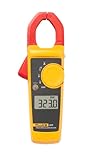
Clamp meter
Fluke 323
Best for: Measuring what a hardwired circuit actually draws, even in a crowded panel
Jump to a section▾
A breaker trips because something asked the circuit to do more than it safely can. The useful question isn't why it tripped once — it's which of four things is causing it to keep happening, because the fix is different for each.
Diagnose from how it trips
The behaviour of the trip identifies the fault before you open anything.
| How it behaves | Most likely cause | Urgency |
|---|---|---|
| Trips after a while, when several things run | Overload | Low — redistribute the load |
| Trips instantly, often with a bang or a flash | Short circuit | High — stop, call an electrician |
| Trips instantly on a GFCI, often near water | Ground fault | Moderate to high |
| Trips on an AFCI with no obvious load | Arc fault, or a nuisance trip | Moderate — investigate |
| Trips with nothing plugged in | Fault in the fixed wiring, or a failed breaker | High |
| Won't reset at all | Fault still present, or the breaker has failed | High |
Overload is a quantity problem — too much current for too long. Short circuit, ground fault and arc fault are all integrity problems: something in the wiring or a device has failed, and the breaker is doing exactly its job. The first is an inconvenience; the other three are the reason breakers exist.
The four causes
1. Overload — the circuit is doing too much
The most common cause and the least alarming. Total current on the circuit exceeded the breaker rating for long enough to trip it.
How you recognize it: it trips when several things run at once, and it takes a little while rather than tripping instantly. A space heater plus a hair dryer on a 15-amp bedroom circuit is the classic case.
The math: watts ÷ volts = amps. A 1,500-watt space heater on 120 volts pulls 12.5 amps — most of a 15-amp circuit on its own. The NEC limits continuous loads to 80% of the breaker rating, which puts the practical ceiling on a 15-amp circuit at 12 amps and on a 20-amp circuit at 16.
The fix: move loads to another circuit, or add a circuit. Not a bigger breaker.
Our appliance wattage chart lists typical draws, and the how many amps does an appliance use pages give per-appliance figures.
2. Short circuit — energized conductor touching neutral
A direct, low-resistance connection between the energized conductor and the neutral. Current spikes enormously and the breaker's magnetic trip fires instantly.
How you recognize it: it trips immediately, every time, often with a bang or a visible flash. It won't stay on for even a second.
Common sources: a damaged appliance cord, a failed appliance, a nail or screw driven through a cable, a wire crushed in a box, or a rodent-chewed cable.
The fix: unplug everything on the circuit and reset. If it holds, plug items back one at a time until it trips — that's your culprit. If it trips with nothing plugged in, the fault is in the wiring and needs an electrician.
3. Ground fault — current leaking to ground
Current escaping its intended path and returning through the equipment grounding conductor, a water pipe, or a person.
How you recognize it: it's a GFCI breaker or GFCI outlet that's tripping, and it often correlates with moisture — a bathroom, a kitchen, an outdoor receptacle, a garage, or a basement after rain.
Why the trip threshold is tiny: a GFCI trips at roughly 5 milliamps of imbalance, thousands of times below the breaker's overcurrent rating, because the hazard it's protecting against is electrocution rather than overheated wire.
The fix: find the moisture or the failing appliance. Old refrigerators, well pumps, and outdoor lighting are frequent offenders. See why does my GFCI keep tripping.
4. The breaker itself has failed
Breakers are mechanical devices and they wear. A breaker that has tripped many times, or one that has spent decades thermally cycling, can weaken and start tripping below its rating.
How you recognize it: by elimination. The circuit isn't loaded, nothing is plugged in, there's no moisture, and it still trips. Or the handle feels loose and mushy compared to its neighbors.
The fix: breaker replacement, by an electrician — matched to the panel's listing, which is not a matter of what physically fits. See breaker brand compatibility.
AFCI breakers: a fifth pattern
If the tripping breaker has a TEST button and serves bedrooms or living areas, it's likely an AFCI — an arc-fault circuit interrupter. AFCIs detect the electrical signature of arcing, which is a fire precursor that overcurrent protection never catches.
They also nuisance-trip more than standard breakers. Motor brushes in vacuums, some dimmers, some LED drivers, and certain power tools produce signatures that older AFCI designs read as arcing. That's a real limitation, not an argument for removing the protection — see AFCI breakers explained.
A diagnostic sequence
- Note what was running. The loads at the moment of the trip separate overload from everything else.
- Reset properly. Push the handle fully to OFF, then to ON. A halfway handle won't reset.
- Trips instantly with nothing plugged in? Short circuit or ground fault in the wiring. Stop; call an electrician.
- Holds with everything unplugged? Reconnect one item at a time, giving each a few minutes.
- Trips only under a specific combination? Overload. Redistribute the loads.
- No pattern at all? Suspect the breaker, or a fault that only appears under some conditions. Electrician.
Can I just install a bigger breaker?
- Never fit a larger breaker to stop nuisance tripping. It removes the wire's protection.
- Never wedge or tape a breaker on. Same problem, worse.
- Don't ignore repeated instant trips. An immediate trip means a real fault exists right now.
- Don't keep resetting a breaker that's warm, or one where the panel smells hot. See signs your electrical panel is failing.
Preventing it
Most household tripping is load distribution, not defects. Two habits fix most of it:
- Know which outlets share a circuit. A labeled panel makes this obvious — see how to label an electrical panel.
- Keep the heavy loads apart. Space heaters, window ACs, kettles, hair dryers, and microwaves are each most of a circuit on their own. Two of them together is a trip.
If you consistently run out of circuits rather than capacity, adding circuits is the answer, and that's a space question — see Electrical panel upgrade.
Measuring the circuit instead of guessing at it
Step 1 of the diagnostic sequence — note what was running — is guesswork until you know what the circuit actually draws against the 12-amp and 16-amp ceilings above. A clamp meter reads that current without disconnecting anything, which is what separates a genuine overload from a fault that needs an electrician. One unit that does this:
We earn a commission if you buy through links on this page, at no extra cost to you. It does not change what we recommend — see our affiliate disclosure. As an Amazon Associate I earn from qualifying purchases.
Clamp meter
Fluke 323
Compact true-RMS clamp meter built around a slim jaw for crowded panels.
Best for: Measuring what a hardwired circuit actually draws, even in a crowded panel
- AC current
- Up to 400 A via clamp
- Measurement
- True-RMS
- Safety rating
- CAT IV 300 V / CAT III 600 V
- Slim jaw gets around conductors the bigger meters cannot reach
- CAT IV 300 V rating covers service-entrance-adjacent work
- Small enough to carry constantly
- Reads one conductor at a time — clamped around a whole cord or cable it shows close to zero
- AC current only, and fewer secondary functions than a combination clamp/multimeter
More options in every size are in the electrical tester picks.
Where to go next
- EV charger keeps tripping the breaker
- What size breaker do I need
- How many outlets on a 20-amp circuit
- GFCI vs AFCI
More in our electrical panel guides.
Frequently asked questions
Ask AI about this
Open an AI assistant with a question grounded in this page.