
Generator Breaker Keeps Tripping: Overload, Short or Fault
Updated 2026-10-10 · 7 min read
Gear this guide recommends
We earn a commission if you buy through links on this page, at no extra cost to you. It does not change what we recommend — see our affiliate disclosure. As an Amazon Associate I earn from qualifying purchases.

Neutral-ground bonding plug
Southwire Surge Guard Generator Neutral-Ground Bonding Plug (44400)
Best for: A floating-neutral generator run on cords, when an RV surge protector reports open ground or an EV charger refuses to start
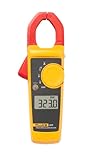
Clamp meter
Fluke 323
Best for: Measuring what a hardwired circuit actually draws, even in a crowded panel
Jump to a section▾
The generator is running fine. Then a click, the lights go out, and the little breaker on the panel has popped again. Reset it, and it holds for a minute, or an hour, or until the fridge starts.
Short answer: a generator breaker that keeps tripping is almost always doing its job. The load on that outlet, or on the whole generator, is more than it can carry, usually because a motor's starting surge wasn't counted. First work out which device tripped: the generator's outlet breaker, its overload indicator, a GFCI, or a breaker in the house panel. Then unplug everything, reset, and add loads back one at a time with a clamp meter. If it trips with nothing plugged in, stop: that's a fault inside the generator.
Which breaker tripped?
| What tripped | Where | What it's saying |
|---|---|---|
| Outlet breaker on the generator panel (push-button or toggle) | Generator | That outlet's circuit is overloaded or shorted |
| Main output breaker | Generator | The whole generator is overloaded |
| Overload indicator or light (inverter units) | Generator | The inverter cut output to protect itself |
| GFCI button on a generator outlet | Generator | Leakage to ground, not overload |
| A branch breaker in the house panel | House | That one circuit is overloaded or faulty |
| The generator breaker on a transfer switch or interlock | House | Everything on the generator exceeds its rating |
Honda's EU2200i manual describes the first row exactly: the AC circuit protector "will automatically switch OFF if there is a short circuit or a significant overload of the generator at the 20 A receptacles," and says to confirm the appliance is working and within the circuit's rating before resetting it. That's the whole method in one sentence.
If the generator's breakers are fine but a house circuit keeps dropping, the problem is on that circuit, not the generator; see why does my breaker keep tripping. If nothing trips but there's no output, that's a different checklist: generator running but no power.
Cause 1: overload, and the surge you didn't count
Two numbers define a generator: rated (or running) watts it can carry continuously, and maximum (starting, peak or surge) watts it can supply for a few seconds. Honda's EU2200i, for example, is 1,800 W rated and 2,200 W maximum. Size on the rated figure; the difference is reserved for starting motors.
Motors are the problem. A refrigerator, a sump pump, a furnace blower or an air conditioner draws roughly two to three times its running watts for a moment as it starts, and a compressor that tries to restart against pressure can draw more. Add a 700 W fridge to a generator already carrying 1,500 W of lights and electronics, and the start pushes a 2,200 W unit past its ceiling for just long enough to trip. Honda's manual notes the overload indicator may come on when a motor starts and calls that normal if it clears within about four seconds; if it stays on, the output shuts off.
The outlet has its own limit. A 20 A, 120 V receptacle is a 2,400 W circuit, and for a load that runs for hours, the NEC's continuous-load rule (210.20(A), 125% of the load, or 80% of the breaker) says plan on about 16 A, roughly 1,900 W, through it. A 30 A L5-30 or L14-30 carries 3,600 W at 120 V. Two space heaters on one duplex will trip the outlet breaker on a generator that could easily carry them across two outlets.
What to do: list your loads with starting watts vs running watts, start the largest motor first with nothing else connected, and spread loads across outlets. If the math doesn't fit, the generator is too small; read generator sizing mistakes before you buy the next one.
Cause 2: a short, a bad cord or a bad appliance
A breaker that trips instantly every time, rather than after a delay, is seeing a short circuit or a near-short, not a slow overload.
- Extension cords: a crushed jacket, a cut, a nicked conductor where the plug was pulled out by the cord, or a plug with a bent or burned pin. An undersized, overlong cord doesn't trip breakers by itself, but it drops voltage, which makes motors draw more current and trip sooner. See generator extension cords and gauge.
- The appliance: a failing motor winding, a heating element shorted to its sheath, a damaged power cord. Plug it into a known-good house circuit after the outage, or into the generator alone, and see whether it trips there too.
- The plug or inlet: a half-seated twist-lock, or a melted inlet contact on the house side.
What to do: unplug everything and reset. If the breaker holds, plug loads in one at a time until it trips. The last thing you plugged in, or its cord, is the suspect.
Cause 3: GFCI trips, wet cords and the neutral
Portable generators have GFCI-protected receptacles (NEC 445.20 in recent editions), and a GFCI trips on a few milliamps of leakage, not on overload. Champion's manual is explicit that the GFCI "does not protect against circuit overloads."
- Water. Rain on a cord connection lying in the grass, a wet tool, a damp extension-cord junction. Dry everything, lift connections off the ground, and read running a generator in rain and snow.
- A cord or tool with damaged insulation leaking to ground.
- The neutral. A bonded-neutral generator feeding a transfer switch that doesn't switch the neutral sends return current along two paths, which a GFCI reads as leakage and trips on, while a floating-neutral generator on cords may leave its GFCIs unable to work as designed; both are explained in generator neutral bonding, and a bonding plug belongs only on a floating unit running cords, never one feeding a house.
We earn a commission if you buy through links on this page, at no extra cost to you. It does not change what we recommend — see our affiliate disclosure. As an Amazon Associate I earn from qualifying purchases.
What to do: reset the GFCI with nothing plugged in. If it holds, add loads back one at a time. If it trips with nothing connected, the generator needs service.
Cause 4: heat and altitude
Breakers are thermal devices, and so is the engine's output.
- Heat. A thermal-magnetic breaker trips on heat in its own element, and a panel baking in the sun on a 95 °F afternoon reaches its trip point at a lower current than it would on a cool day. The generator's own cooling also suffers.
- Altitude. Thinner air means less engine power. Champion's manuals state that engine power and generator output fall "approximately 3½% for every 1000 feet of elevation above sea level," and Honda's EU2200i manual gives the same 3.5% per 1,000 ft figure for engine horsepower even after a high-altitude carburetor jet is fitted. At 5,000 ft, a generator rated 3,600 W at sea level is good for roughly 3,000 W.
- Eco mode. An inverter idling in eco mode can be caught flat-footed by a big motor start. Honda's manual advises turning Eco Throttle off for appliances with large start-up demands.
What to do: derate the generator for the day and the elevation, shade it without enclosing it, and keep its intake and exhaust clear.
The diagnosis sequence
- Unplug every load and switch off any transfer-switch circuits.
- Reset the breaker or GFCI, or clear the overload indicator the way the manual describes. Many inverter units reset by stopping and restarting the engine.
- Does it trip with nothing connected? Yes: stop here and go to "When to stop." No: continue.
- Add the largest motor load first, alone. Watch for the overload light.
- Add remaining loads one at a time, biggest to smallest, and read the current after each with a clamp meter on one conductor. A plug-in line splitter separates the hot so the clamp can read a cord; a clamp around a whole cord reads zero because the currents cancel. On the generator's own 240 V twist-lock, read each hot.
- Note the total when it trips. Compare it with the outlet's rating and the generator's rated watts, derated for heat and altitude. That's your answer.
When to stop
- It trips with nothing plugged in. A shorted stator winding, a failed inverter module, a breaker or GFCI that has itself failed, or water inside the panel. That's service work; don't keep resetting it, and don't open the alternator housing.
- The breaker is hot, discolored or smells. Replace it, through a service shop. A breaker that has tripped many times can weaken and trip early, but the cause of all those trips still has to be found.
- The engine labors, bogs or surges under a load it used to carry. Engine, fuel or governor trouble, not an electrical one.
- You're tempted to bypass it. Taping a breaker, jumpering a GFCI, or plugging the generator into a dryer outlet to get around a tripping transfer switch are all fire and electrocution hazards. See backfeeding dangers.
Safety while you troubleshoot
- Outdoors only, at least 20 feet from the house, exhaust pointed away from doors and windows, never in a garage or under a porch, even for a quick test. Every reset-and-retry is another run, and all of them belong outside. See carbon monoxide safety.
- Breakers off before plugging or unplugging a cord, and loads switched off before you connect them.
- Keep hands and the meter out of the panel. Clamp cords and read receptacles; don't open the control panel with the engine running.
Standards and code reference
The standards behind this guide, for looking up in the edition your jurisdiction has adopted:
- NEC 445.12: overcurrent protection for generators
- NEC 445.20: GFCI protection for receptacles on portable generators rated 15 kW or smaller
- NEC 210.20(A): continuous loads limited to 80% of a branch circuit's overcurrent device
- NEC 702.5: transfer equipment required before a generator feeds premises wiring
- Honda EU2200i owner's manual (00X31-Z44-6100): AC circuit protector, overload indicator behavior, Eco Throttle and motor loads, 3.5% per 1,000 ft
- Champion Power Equipment owner's manual, model 100163: GFCI does not protect against overload, neutral bonding and transfer switches, 3.5% per 1,000 ft derating
- ANSI/PGMA G300: portable generator safety, including CO shutoff
Code editions and local amendments vary. Confirm the adopted edition with your AHJ, and treat manufacturer instructions as governing wherever they are more restrictive.
Where to go next
- Why is my generator surging?
- Generator running but no power
- Starting watts vs running watts
- Generator neutral bonding
- Size it properly: generator sizing calculator
More in our generator and backup power guides.
Frequently asked questions
Ask AI about this
Open an AI assistant with a question grounded in this page.