
CO2 monitor (NDIR)
Aranet4 HOME CO2 Monitor
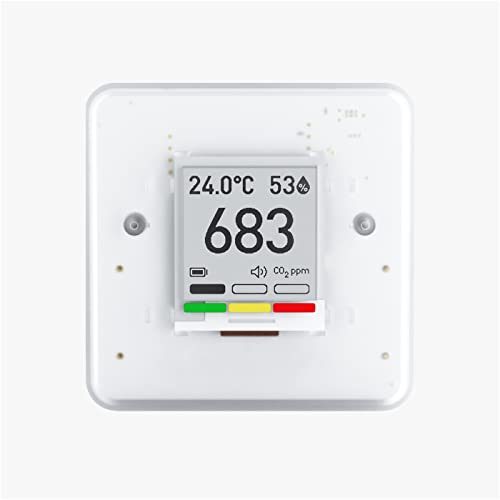
A battery-powered CO₂ monitor with a true NDIR sensor and an e-ink screen that also shows temperature and relative humidity, with history synced to a phone over Bluetooth.
We earn a commission if you buy through links on this page, at no extra cost to you. It does not change what we recommend — see our affiliate disclosure. As an Amazon Associate I earn from qualifying purchases.
Best for
Finding out whether a stuffy room is short of fresh air
Specifications
| Measures | CO₂, temperature, relative humidity, barometric pressure (pressure in the app only) |
|---|---|
| CO₂ sensor | NDIR (non-dispersive infrared) — measured CO₂, not an estimate |
| CO₂ range / accuracy | 0–9,999 ppm; ±(30 ppm + 3% of reading), specified for 0–5,000 ppm at 59–95 °F |
| Humidity | 0–85% RH, ±3% |
| Temperature | 32–122 °F, ±0.5 °F |
| Display | E-ink with colour status (defaults: green under 1,000 ppm, amber 1,000–1,400, red above 1,400) |
| Power | 2 × AA (included); Aranet rates 2.8 years at 5-minute readings with Bluetooth on (alkaline) |
| Connectivity | Bluetooth to the free Aranet Home app; stores 30 days on the device at 10-minute readings |
| Calibration | Factory-calibrated; automatic background calibration or manual fresh-air calibration |
| Subscription | None |
| Warranty | 2 years (extendable to 3 with registration) |
Specifications as published by Aranet. Confirm against the current spec sheet before buying — manufacturers revise models without renaming them.
What's good
- Real NDIR CO₂ sensor — the number reflects the air in the room, not a guess derived from other gases
- Readable on the device itself, no app needed for the live reading, and the colour status makes a closed bedroom's overnight climb obvious
- Runs for years on two AA cells, so it can sit in a bedroom or move room to room without a cord
What's not
- Bluetooth only — no Wi-Fi of its own, so history syncs when a phone is nearby
- Auto-calibration assumes the sensor periodically sees fresh outdoor-level air; Aranet recommends occasional exposure to outdoor air
- No particulate, VOC or radon sensor, and it does not detect carbon monoxide — a CO alarm is a separate device
Our verdict
The instrument our stuffy-house guide calls the most informative single one, because it turns "stale" into a number. Outdoor air sits around 400–450 ppm; leave this in a closed bedroom overnight and watch how far above that it climbs. A steady rise into the high hundreds or beyond while people are in the room tells you air exchange is inadequate, which a fan or an air purifier will not fix and ventilation will. The NDIR sensor is the point — cheaper "CO₂" monitors often estimate it from a VOC sensor instead.
Compare with the alternatives
- Govee Bluetooth Hygrometer Thermometer H5075 — knowing your real indoor humidity, and tracking it across a season
- Airthings View Plus (2960) — one monitor for cooking particulates, co₂, humidity and radon together