
Generator Inlet Box: What It Is and Why You Need One
Updated 2026-09-30 · 5 min read
Gear this guide recommends
We earn a commission if you buy through links on this page, at no extra cost to you. It does not change what we recommend — see our affiliate disclosure. As an Amazon Associate I earn from qualifying purchases.
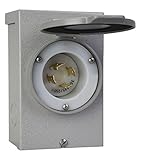
Power inlet box
Reliance Controls PB30 Power Inlet Box (30 A, L14-30)
Best for: Interlock-kit and transfer-switch installs fed by a portable generator's L14-30 outlet

Generator power cord
WEN PC3025 30-Amp Generator Power Cord, 25 ft (L14-30P to L14-30R)
Best for: Connecting an L14-30 generator to a house inlet from 20 feet or more away
Jump to a section▾
An inlet box is a small weatherproof enclosure on an exterior wall with a male inlet you plug a generator cord into. It's the safe connection point between a portable generator and your house wiring.
Inlet box selection
| Generator output | Common inlet | Amps |
|---|---|---|
| 3,500–5,000 W | L14-20 | 20 A |
| 5,000–7,500 W | L14-30 | 30 A |
| 7,500–12,000 W | CS6375 or L14-30 | 30–50 A |
| 12,000 W+ | CS6375 / 14-50 | 50 A |
| Requirement | Note |
|---|---|
| Weatherproof, outdoor rated | Permanently mounted outside |
| Flanged inlet (male recessed) | Not a receptacle |
| Height and location | Reachable, away from windows and doors |
| Cord length | Keeps the generator 20 ft+ from the house |
The inlet box is what lets the cord stay outside while the connection comes in through the wall — so the generator sits at a safe distance and the door is not propped open on an extension cord.
For a generator with an L14-30 outlet, the common 30 A row above, Reliance's PB30 is that box: a cULus-listed 30 A, 125/250 V L14-30 inlet in a NEMA 3R raintight metal enclosure with a self-closing cover. It's only the connection point. Reliance says it has to feed a transfer switch (or a listed interlock kit, where the inspector accepts one), and an electrician installs it.
We earn a commission if you buy through links on this page, at no extra cost to you. It does not change what we recommend — see our affiliate disclosure. As an Amazon Associate I earn from qualifying purchases.
Why does the geometry matter?
Consider connecting a generator to a panel without one. The cord would need a male plug at the house end — and that plug has live exposed pins whenever the generator runs.
An inlet box inverts this. The box carries the male pins, permanently mounted and shrouded. Your cord has a male plug at the generator end and a female connector at the house end, so the power always arrives through a female connector and the only exposed pins you handle are dead until they go into the generator.
This is the same reasoning that makes a double-ended "suicide cord" unacceptable — see backfeeding dangers.
What it connects to
The inlet box is one component of a legal connection:
- Generator → cord →
- Inlet box → feeder →
- Transfer switch or interlock-protected generator breaker →
- Panel
The inlet box doesn't provide the protection — the transfer switch or interlock does. It provides the safe physical connection.
See generator interlock kit vs transfer switch.
Sizing
Three things must agree:
The generator's output receptacle. The inlet must match its configuration — see the NEMA plug chart.
The current rating. Common residential inlets are 30 A or 50 A at 240 V. The inlet, the cord, and the feeder must all be rated for the generator's output.
The feeder conductors, sized for the current and the run length, and protected appropriately.
Get these matched at design time. An inlet that doesn't match your generator's outlet is a common and annoying discovery — and adapters at high continuous current are not a good answer.
If you're buying the generator and the installation together, decide the connection method before buying the generator, so the receptacles match. See What size generator do I need.
Placement
Two competing requirements to balance:
Generator distance. CO safety requires the generator at least 20 feet from the building with exhaust directed away. The inlet box needs to be positioned so that's achievable — including where you'd realistically put the generator in bad weather. See generator carbon monoxide safety.
Feeder length. The run from the inlet box to the transfer switch or panel costs money and voltage. Shorter is better.
Practical considerations:
- Weather-protected, ideally under an eave rather than fully exposed
- Accessible in the dark, in rain, in snow — not behind a gate you'd have to unlock or a shrub you'd have to push through
- Not where snow drifts or where a roofline dumps meltwater
- Sensible height — comfortable to reach, above snow line
- A clear cord path that doesn't cross a walkway or a driveway you'd need to use
Walk the route before it's installed. The layout that looks fine on a summer afternoon can be impractical at 2 a.m. in an ice storm.
The cord
The generator cord is a real component, not an afterthought:
- Matched connectors at both ends — generator receptacle and inlet box
- Rated for the current
- Sized for the length — voltage drop matters, and the generator is 20+ feet away by design
- Outdoor rated
- Long enough to reach the generator's safe position, with margin
Buy it as part of the installation and test the whole chain once, before you need it.
For an L14-30 inlet, WEN's PC3025 covers that list: L14-30 twist-lock ends, rated 30 A at 250 V, 10 AWG (about 1.9 V of drop at a full 30 A over 25 ft, under 1%), outdoor-rated SJTW jacket, and 25 ft so the generator can sit past the 20-foot mark. The 40 ft PC3040 is the same cord for a deep yard or a corner. WEN's page states no UL, ETL or CSA listing for it.
Installation
Inlet box installation is part of the overall generator connection work: permitted, inspected, and involving a feeder terminated in an energized panel.
That makes it electrician work — see generator permits and inspection and generator electrical requirements.
While the electrician is there, confirm the neutral bonding configuration matches the transfer equipment. It's a decision that must be made at installation and it's easy to get wrong — see generator neutral bonding.
Test it before you need it
The most useful thing you can do after installation:
- Start the generator, let it stabilize
- Connect the cord to the inlet box
- Switch the main off, operate the interlock or transfer switch
- Confirm the circuits you expect come alive
- Reverse the sequence
Do it once in daylight, and make sure anyone else in the house who might need to do it has watched. Discovering the cord is too short or the connector doesn't match during an outage is avoidable.
Standards and code reference
The standards behind this guide, for looking up in the edition your jurisdiction has adopted:
- NEC Article 702 — optional standby systems
- NEMA — the plug and inlet configurations referenced here
Code editions and local amendments vary. Confirm the adopted edition with your AHJ, and treat manufacturer instructions as governing wherever they are more restrictive.
Where to go next
- How to connect a generator to your house
- Generator extension cords and wire gauge
- Transfer switch explained
More in our generator and backup power guides.
Frequently asked questions
Ask AI about this
Open an AI assistant with a question grounded in this page.