
Electrical Panel Sizes: 60, 100, 150, 200 and 400 Amps
Updated 2026-08-16 · 7 min read
Gear this guide recommends
We earn a commission if you buy through links on this page, at no extra cost to you. It does not change what we recommend — see our affiliate disclosure. As an Amazon Associate I earn from qualifying purchases.
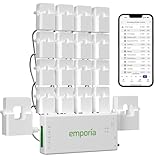
Whole-home energy monitor
Emporia Vue 3 Home Energy Monitor (16 circuit sensors)
Best for: Measuring hardwired and 240 V loads, or every circuit at once
Jump to a section▾
Your service size is the single number stamped on the main breaker. It's the ceiling on everything the house can draw simultaneously, and it's the number that determines whether a new heat pump or EV charger is a simple circuit addition or a project.
What are the standard electrical panel sizes?
| Service | Typical era | Realistically supports |
|---|---|---|
| 60 A | Pre-1960 | Lighting, receptacles, gas appliances. No meaningful electrification headroom. |
| 100 A | 1960s–1990s, still common | Gas heat, gas range, gas water heater, normal appliances. Often workable with one EV charger; tight with several electric loads. |
| 125 A / 150 A | Common upgrade sizes | A mixed-fuel home with room for one or two significant electric additions. |
| 200 A | Modern default | Heat pump, EV charger, electric range and dryer, electric water heater — with headroom. |
| 400 A | Large or fully electric homes | Multiple EVs, large square footage, shop or ADU on the same service. |
Treat this as orientation. The real answer for your house comes from a calculation.
Is 100 amps enough for a house?
For a one-family dwelling, the NEC sets a minimum service of 100 amps. Smaller existing services — usually 60 amps — are generally allowed to remain in place, but any new or upgraded service starts at 100.
This is why a 60-amp service tends to get replaced not because it failed, but because the first meaningful electrical project triggers an upgrade to at least 100.
Why the calculation beats the rule of thumb
Adding up appliance nameplates gives a number far above what any house actually draws, because nothing runs at maximum simultaneously. Your range, dryer, water heater, and heat pump have never all peaked at the same moment and never will.
NEC Article 220 handles this with standardized demand factors — a method that takes general lighting load by square footage, adds appliance loads, and applies diversity. There's a standard method and an optional method for dwellings; the optional method is usually more favorable and is what most electricians run for a service upgrade.
Two houses of identical size can land on very different answers depending on fuel mix. Gas heat and a gas range remove two of the largest electric loads entirely.
Run yours with the home electrical load calculator.
What pushes a home past 100 amp service?
Not square footage. Specific loads:
| Load | Approximate demand |
|---|---|
| Electric range | 8–12 kW |
| Electric dryer | 5 kW |
| Electric water heater | 4.5 kW |
| Central heat pump | 3–10 kW depending on size and backup heat |
| Electric resistance backup heat | 10–20 kW |
| Level 2 EV charger | 7–11.5 kW |
Electric resistance backup heat is the quiet giant on that list — a 15 kW strip heater is 62 amps at 240 volts by itself, which is why homes with heat pumps and electric backup so often need 200 amps.
Conversely, a home with gas heat, a gas range, and a gas water heater has removed most of the list and frequently runs comfortably on 100 amps even with an EV charger.
Do I need 400 amp service?
400-amp services exist, but they're a much bigger step than 100 to 200 — often two 200-amp panels fed from a 400-amp meter, heavier conductors, and sometimes utility infrastructure work.
Situations that genuinely justify it: a large fully electric home, two EVs charging simultaneously at high amperage, an ADU or workshop on the same service, or a calculated load that genuinely exceeds 200 amps.
Situations that don't: wanting margin. See 200-amp vs 400-amp service.
How do I find my electrical service size?
Main breaker panel: read the number on the single large breaker, usually alone at the top.
Main lug panel: there's no main breaker inside. Check the exterior disconnect next to the meter, or the meter-main combination. See main breaker vs main lug panels.
Neither is obvious: the utility has your service on record, and any electrician can identify it in seconds.
Don't read the panel label's rating as your service size. A panel rated 200 amps fed by a 100-amp service is a 100-amp service.
Service size vs breaker spaces
These get conflated constantly, and they're independent.
- Service size = amps available. Set by the main breaker.
- Spaces = how many breakers physically fit.
You can be full of one and not the other. A panel with no free slots but modest demand needs a subpanel or tandem breakers, not a service upgrade. A panel with free slots and a near-maxed calculation needs the opposite.
See how many circuits can a panel hold and Electrical panel upgrade.
Does a bigger panel cost more to run?
A common misconception worth killing: service size is a capacity limit, not consumption. Your bill is kilowatt-hours used. A 200-amp service that draws the same energy as a 100-amp service costs exactly the same.
Upsizing costs money once, at installation. It costs nothing monthly.
Where to go next
- Flush mount vs surface mount electrical panel
- 100-amp vs 200-amp panels
- Electrical panel upgrade
- How to do a home electrical load calculation
More in our electrical panel guides.
Frequently asked questions
Ask AI about this
Open an AI assistant with a question grounded in this page.