
Heat Pump Electricity Usage: How Much Does One Actually Use?
Updated 2026-08-16 · 8 min read
Gear this guide recommends
We earn a commission if you buy through links on this page, at no extra cost to you. It does not change what we recommend — see our affiliate disclosure. As an Amazon Associate I earn from qualifying purchases.
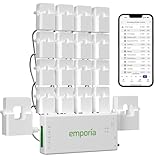
Whole-home energy monitor
Emporia Vue 3 Home Energy Monitor (16 circuit sensors)
Best for: Measuring hardwired and 240 V loads, or every circuit at once
Jump to a section▾
"Do heat pumps use a lot of electricity?" is the question almost everyone asks before installing one — and the answer surprises people.
Yes, a heat pump runs on electricity — but it uses far less of it than any other electric heating for the same warmth. The reason is a bit of physics that sets heat pumps apart from every furnace and space heater: they don't make heat, they move it. This guide explains how much electricity a heat pump actually uses, what it does to your bill, and how it compares to the alternatives.
The key idea: moving heat beats making heat
A traditional electric heater — a furnace element, a baseboard, a space heater — works by converting electricity directly into heat. That's 100% efficient in the narrow sense: one unit of electricity makes one unit of heat. You can't do better than 1-to-1 that way.
A heat pump breaks that ceiling by not making heat at all. It uses electricity to move existing heat — pulling warmth from the outside air (even cold air contains heat energy) and pumping it indoors, the same way a refrigerator moves heat out of its interior. Because moving heat takes far less energy than creating it, a heat pump delivers:
2 to 4 units of heat for every 1 unit of electricity it uses.
That efficiency multiplier is why a heat pump uses roughly a third to a half of the electricity that an electric furnace or baseboard would use to heat the same space. It's not a little more efficient — it's several times more efficient. That's the whole reason heat pumps exist and why they're the centerpiece of home electrification. For the full mechanism, see how does a heat pump work.
How much electricity does a heat pump use?
Usage varies a lot because it tracks how hard the system is working, but a rough picture:
| Period | Typical monthly use | Why |
|---|---|---|
| Mild months (spring/fall) | Low — a few hundred kWh | Little heating or cooling needed |
| Peak cooling (summer) | ~900–2,000 kWh | Runs long hours in heat |
| Peak heating (winter) | ~1,000–3,000 kWh | Hardest work; backup heat may engage |
The big swing factors are your climate, home size and insulation, and the unit's efficiency ratings — SEER2 for cooling and HSPF2 for heating (higher is better on both). A well-insulated home with an efficient cold-climate unit sits at the low end; a leaky home in an extreme climate sits at the high end. Estimate your own operating cost with the heat pump cost calculator, and price the raw electricity of any load with the electricity cost calculator.
Will it raise my electric bill?
This is where people get confused, so it's worth separating two things:
- Your electric bill often goes up — because the heat pump moves your heating and cooling onto electricity.
- Your total energy bill usually goes down — because the heat pump is so much more efficient than what it replaced.
It depends on what you're switching from:
- Replacing electric-resistance heat (baseboards, electric furnace): your electric bill typically drops, since the heat pump uses a fraction of the electricity for the same heat.
- Replacing oil or propane: big savings — those fuels are expensive, and the heat pump's electricity is far cheaper per unit of heat.
- Replacing a gas furnace: the electric bill rises while the gas bill falls; the net depends on your local electricity and gas rates, but heat pumps are often competitive or cheaper — and much cleaner.
The single most important thing is to look at your whole energy bill, not just the electric line. A rising electric bill alongside a vanishing oil or propane bill is a win, not a cost. See heat pump vs electric resistance heat and heat pump vs furnace for the direct matchups.
The cold-weather caveat
Heat pump efficiency declines as it gets colder — there's less heat in the outside air to move, so the system works harder and its heat-per-unit-of-electricity ratio falls. In a deep cold snap, many heat pumps fall back on electric-resistance backup heat, which is that inefficient 1-to-1 heating — and that's when a heat pump's electricity use spikes.
Two things to know:
- Modern cold-climate heat pumps stay efficient well below freezing — far better than older models — and work in genuinely cold regions.
- Backup heat is occasional, engaging only in the coldest hours, so it doesn't define your average usage.
The detail is covered in do heat pumps work in cold weather. For most of the year and most climates, the heat pump's efficient mode dominates.
Heat pump vs. the alternatives
| Heating type | Electricity to heat a given space | Notes |
|---|---|---|
| Heat pump | Lowest (moves heat, 2–4× efficient) | Also cools in summer |
| Electric furnace / baseboard | 2–3× a heat pump's | Simple but expensive to run |
| Space heaters (whole-home) | Highest in practice | Fine for one room, costly at scale |
| Gas furnace | N/A (burns gas) | Compare on local fuel prices |
For cooling, a heat pump and an air conditioner of the same efficiency use about the same electricity — a heat pump is essentially an AC that also runs in reverse to heat. So you're not paying an electricity penalty for cooling; you're gaining efficient heating on top. See heat pump vs air conditioner.
The bottom line
Heat pumps use electricity, but not a lot relative to the heating they deliver — they move heat instead of making it, giving you 2–4 units of warmth per unit of power and using a third to a half the electricity of an electric furnace or baseboards. Your electric bill may rise because heating and cooling shift onto it, but your total energy bill usually falls, especially versus resistance, oil, or propane heat. The one caveat is deep cold, where efficiency dips and backup heat can raise usage — mitigated by modern cold-climate models. To see the real operating cost and payback for your home, use the calculators below.
Frequently asked questions
Ask AI about this
Open an AI assistant with a question grounded in this page.