
Why Is My Electric Bill So High? 9 Common Causes
Updated 2026-09-30 · 9 min read
Gear this guide recommends
We earn a commission if you buy through links on this page, at no extra cost to you. It does not change what we recommend — see our affiliate disclosure. As an Amazon Associate I earn from qualifying purchases.
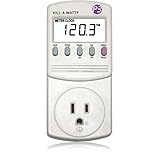
Plug-in power meter
P3 International Kill A Watt P4400
Best for: Measuring what one plug-in appliance really uses
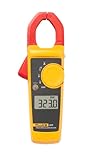
Clamp meter
Fluke 323
Best for: Measuring what a hardwired circuit actually draws, even in a crowded panel
Jump to a section▾
Opening a power bill that's suddenly far higher than last month is one of the most common — and most frustrating — home-energy surprises.
The good news: a high electric bill almost never has a mysterious cause. It traces to a short list of usual suspects, and with a few minutes of comparison you can usually pin down exactly which one hit you. This guide walks through the nine most common reasons, how to tell them apart, and what to do about each.
The single most useful first step: look at kilowatt-hours (kWh) used, not just the dollar total. Your bill shows both. If the kWh climbed, you used more energy — the cause is usage (almost always heating or cooling). If the kWh is flat but the dollars rose, you used the same energy at a higher price — the cause is your rate or fixed charges. That one distinction cuts the problem in half before you investigate anything else.
First: is it a usage problem or a price problem?
Every electric bill is fundamentally the same equation:
Bill = (kWh used × your rate per kWh) + fixed monthly charges
So a bill can rise for exactly three reasons: you used more kWh, the price per kWh went up, or the fixed charges changed. Compare this month's kWh to the same month last year (same season matters — don't compare July to April). Then:
- kWh up, rate the same → a usage spike. Look at causes 1–5 below.
- kWh flat, dollars up → a rate or billing change. Look at causes 6–9.
- Both up → you have two things happening at once, which is common in summer.
You can put your own numbers into the electricity bill estimator to see what your usage should cost, then compare it to what you were actually charged.
The 5 usage-driven causes
1. Heating or cooling ran far more hours
This is the number-one cause of a spiking bill, full stop. Air conditioning and electric heat are the highest-wattage, longest-running loads in most homes, so a heat wave or a cold snap moves your bill more than anything else. During an extreme week your AC or heat strips may run nearly around the clock instead of cycling a few times an hour — and the bill follows.
How to confirm: Check whether the spike lines up with unusually hot or cold weather that cycle. If it does, this is almost certainly your answer. It's not a malfunction; it's physics.
What helps: A few degrees on the thermostat, sealing air leaks, and — for the long run — a heat pump, which moves heat instead of generating it and uses a fraction of the electricity of electric-resistance heat.
2. Electric resistance heat is doing the heavy lifting
If your home heats with baseboards, wall heaters, or electric furnace/strip heat, winter bills can be brutal — resistance heating converts electricity to heat at a 1-to-1 ratio, so there's no efficiency to hide behind. Even a heat pump falls back to resistance "backup" heat in very cold weather, which can quietly spike a bill during a freeze. See heat pump vs. electric resistance heat for the full comparison.
3. A new high-wattage appliance — often an EV
Adding a load that runs long and hot changes the whole picture. The most common modern culprit is charging an EV at home, which can add roughly the electricity of a second refrigerator running full time — often $30–$60 a month or more depending on miles and rate. A new hot tub, electric water heater, pool pump, space heater, or window AC unit does the same on a smaller scale. If your bill stepped up permanently the month after a purchase, that's the link.
What helps: If it's an EV, shifting charging to off-peak overnight hours on a time-of-use plan can cut the added cost substantially.
4. Water heating quietly climbed
Water heating is often the second-biggest load in a home. A bill can rise from more hot-water use (houseguests, more laundry in hot water), a thermostat set too high, or a failing element that runs longer to hit temperature. Setting the tank to around 120°F is both safer and cheaper. A failing lower element on an electric tank is a classic hidden cost — the tank runs far longer than it should to keep up.
5. A stuck-on or failing device
Occasionally the cause is a genuine fault: a well pump short-cycling, an HVAC system running constantly because it can't reach setpoint, a water heater element stuck on, or a space heater someone left running in a spare room. These show up as a high baseline — power draw that never drops even when the house is quiet.
The away test: Note your meter reading, leave for a few hours with everything off, and read it again. If the meter moved a lot with nothing intentionally running, you have a phantom or stuck load worth tracking down.
The 4 price-and-billing causes
6. Your utility raised its rate
Rates change. Utilities file rate increases, fuel-cost adjustments, and seasonal pricing that can push your price per kWh up even when your usage is identical. This is the classic "kWh flat, dollars up" case. Check your bill's rate line or your utility's rate page and compare it to a prior bill. You can see how your state compares on our electricity rates page.
7. You moved onto (or off) a time-of-use plan
On a time-of-use (TOU) plan, electricity costs more during peak hours (typically late afternoon and evening) and less overnight. If you switched plans — or your utility moved you automatically — and your heavy usage happens to fall in peak hours, your bill can jump even with the same total kWh. TOU rewards shifting laundry, dishwashing, and EV charging to off-peak; it punishes heavy peak-hour use.
8. An estimated read got corrected
Utilities sometimes estimate a meter read when they can't get an actual reading, then true it up on a later bill. If a low estimate was followed by a real read, one bill absorbs the difference and looks abnormally high — even though your average usage never changed. Check whether your recent bills are marked "estimated" versus "actual." If so, the spike is a catch-up, not new usage.
9. Billing-cycle length or fixed-charge changes
Not every billing cycle is the same number of days. A 35-day cycle bills more than a 28-day cycle for identical daily usage. Utilities also carry fixed monthly charges (connection, delivery, minimum bill) that can change and that you pay regardless of how little you use. Neither shows up in your kWh — so if usage is flat and the rate held, check the number of days billed and the fixed-charge line.
Can a bad breaker cause a high electric bill?
Almost never directly. A breaker is a switch with a trip mechanism. It doesn't use meaningful energy, and your meter only counts what the loads behind it actually consume. A breaker with a loose or burned connection does waste a little power as heat at the bad joint, but far too little to notice on a bill. The real concern is that it's a fire risk: a breaker or panel that feels hot, smells burnt or buzzes needs an electrician, not a bill investigation. See buzzing electrical sounds.
Where a breaker does show up on a bill is indirectly, and the classic case is a tripped heat pump breaker in winter. If the outdoor unit's breaker or disconnect has tripped, the backup strip heat in the indoor air handler can end up carrying the whole heating load at resistance-heat efficiency. The house stays warm, so nobody notices until the bill arrives. A winter spike while the outdoor unit sits silent is worth checking. For what those strips draw, see 10kW heat strip breaker size.
If the meter keeps counting with every breaker off, the problem is ahead of your panel, not in it. See electric meter still running with the main breaker off.
A quick diagnostic table
Use this to jump straight to your likely cause:
| Symptom | Most likely cause | Where to look |
|---|---|---|
| kWh up, matches a hot/cold spell | Heating or cooling (#1, #2) | Weather vs. bill dates |
| kWh stepped up after a purchase | New appliance / EV (#3) | What changed that month |
| kWh up, no weather or purchase | Stuck/failing device (#5) | The "away test" on your meter |
| kWh flat, dollars up | Rate or plan change (#6, #7) | Rate line on the bill |
| One odd bill, then back to normal | Estimated read corrected (#8) | "Estimated" vs. "actual" tag |
| Small persistent rise | Longer cycle / fixed charges (#9) | Days billed + fixed-charge line |
How to pin it down in 10 minutes
- Pull two bills — this month and the same month last year. Write down the kWh on each.
- Decide usage vs. price using the rule above (kWh up = usage; dollars-only up = price).
- If it's usage, match the spike to weather, a new appliance, or run the electricity bill estimator to see which appliances dominate your kWh.
- If it's price, read the rate line and check for a plan change, an estimated read, or a longer cycle.
- If nothing explains it, do the away test — a high baseline with everything off points to a stuck load worth a closer look.
To see the dollar impact of any single appliance, the electricity cost calculator turns its watts and run-hours into a monthly figure, and the cost to run reference has ready-made numbers for common devices like a space heater.
The bottom line
A high electric bill feels mysterious, but it rarely is. Nine causes explain almost every case, and one comparison — kWh this year versus last — tells you whether to chase usage (heating, cooling, water heating, a new load) or price (a rate change, a plan switch, an estimated read, or a longer cycle). Start there, work down the list, and you'll usually find the culprit in a few minutes. For the long-term fix, the biggest, most durable savings come from the loads that run longest and hottest — so that's where to aim. Want to know what your bill should be? Run your numbers through the calculator below.
Finding the stuck load the away test found
The away test tells you a high baseline exists; it does not tell you where it is. Two tools narrow it down. A plug-in energy meter goes between an outlet and any corded appliance and logs what it really uses, in watts and kilowatt-hours — the quickest way to catch a second fridge, a dehumidifier or a space heater costing more than you thought. For hardwired loads, a clamp meter reads current on one conductor at a time, so you can work along the branch circuits at the panel and find the one still drawing with the house quiet. (Clamped around a whole appliance cord it reads close to zero, because the two conductors' currents cancel.) Work inside a panel only if you are comfortable and competent doing so. The usual picks:
We earn a commission if you buy through links on this page, at no extra cost to you. It does not change what we recommend — see our affiliate disclosure. As an Amazon Associate I earn from qualifying purchases.
Plug-in power meter
P3 International Kill A Watt P4400
The plug-through meter that sits between an outlet and any corded 120 V appliance and shows its real volts, amps, watts and cumulative kilowatt-hours.
Best for: Measuring what one plug-in appliance really uses
- Rating
- 125 V AC max, 15 A max, 1,875 VA max
- Displays
- Volts, amps, watts, VA, Hz, power factor, kWh, elapsed time
- kWh counter
- 0.01–9,999 kWh (resets when unplugged)
- Accuracy
- 0.2% (manufacturer claim)
- Size
- 5⅛ × 2⅜ × 1⅝ in, 5 oz
- Warranty
- 6 months
- No tools, no panel, no app — plug it in, plug the appliance into it, read the screen
- True-RMS volts and amps, so motor and electronic loads read correctly, not just heaters
- Leave it for a day or a week and the kWh total is the number every cost estimate is guessing at
- 120 V corded loads up to 15 A only — it cannot measure a 240 V dryer, range, water heater or anything hardwired
- No cost display — multiply the kWh by your rate yourself (P3's P4460 EZ model does the math)
- The counters reset if it is unplugged or the power blinks
Clamp meter
Fluke 323
Compact true-RMS clamp meter built around a slim jaw for crowded panels.
Best for: Measuring what a hardwired circuit actually draws, even in a crowded panel
- AC current
- Up to 400 A via clamp
- Measurement
- True-RMS
- Safety rating
- CAT IV 300 V / CAT III 600 V
- Slim jaw gets around conductors the bigger meters cannot reach
- CAT IV 300 V rating covers service-entrance-adjacent work
- Small enough to carry constantly
- Reads one conductor at a time — clamped around a whole cord or cable it shows close to zero
- AC current only, and fewer secondary functions than a combination clamp/multimeter
More options are in the electrical tester picks.
Where to go next
Frequently asked questions
Ask AI about this
Open an AI assistant with a question grounded in this page.