
What Is a kWh? Kilowatt-Hours Explained Simply
Updated 2026-08-16 · 8 min read
Gear this guide recommends
We earn a commission if you buy through links on this page, at no extra cost to you. It does not change what we recommend — see our affiliate disclosure. As an Amazon Associate I earn from qualifying purchases.
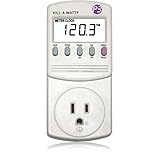
Plug-in power meter
P3 International Kill A Watt P4400
Best for: Measuring what one plug-in appliance really uses
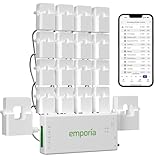
Whole-home energy monitor
Emporia Vue 3 Home Energy Monitor (16 circuit sensors)
Best for: Measuring hardwired and 240 V loads, or every circuit at once
Jump to a section▾
Every electricity bill in America is measured in one unit: the kilowatt-hour, or kWh. It's the single most useful number to understand about your energy use, because it's literally what you pay for.
Yet most people never learn what it actually means. The short version: a kWh is 1,000 watts of power used for one hour — a measure of energy, the total amount of electricity consumed. This guide explains what a kWh is, how it differs from a kilowatt, how to calculate it, and what one kWh costs and powers.
The simple definition
A kilowatt-hour (kWh) is a unit of energy. One kWh equals 1,000 watts running for one hour.
That's it. The name spells out the math: kilowatt (1,000 watts of power) × hour (one hour of time) = kilowatt-hour. So:
- A 1,000-watt microwave running for 1 hour = 1 kWh
- A 100-watt bulb running for 10 hours = 1 kWh
- A 2,000-watt heater running for 30 minutes = 1 kWh
All three consume the same total energy — one kWh — because kWh measures the combination of how much power and how long, not just one or the other. This is why your utility bills in kWh: it captures your total consumption in a single number.
kW vs. kWh: the distinction that trips everyone up
The most common confusion is between a kW and a kWh. They sound alike but measure different things:
- Kilowatt (kW) = power. The rate at which energy is used, right now. It's an instantaneous measure.
- Kilowatt-hour (kWh) = energy. The total amount used over a stretch of time.
The classic analogy is a car:
- kW is like speed (miles per hour) — how fast you're going at this instant.
- kWh is like distance (miles traveled) — the total covered over the trip.
A 5 kW oven draws power at 5 kW the whole time it's on. Run it for two hours and it consumes energy of 5 kW × 2 h = 10 kWh. Your utility doesn't charge for the 5 kW rate — it charges for the 10 kWh total. Power tells you how hard a device pulls; energy (kWh) tells you the bill.
How to calculate kWh
You can figure the energy any appliance uses from two numbers — its wattage (on the label or spec sheet) and the hours you run it:
kWh = watts × hours ÷ 1,000
Dividing by 1,000 converts watts to kilowatts. A few examples:
| Appliance | Watts | Hours | kWh used |
|---|---|---|---|
| LED bulb | 10 | 5 | 0.05 |
| Refrigerator | 150 (avg) | 24 | 3.6 |
| Space heater | 1,500 | 4 | 6.0 |
| Central AC | 3,500 | 6 | 21.0 |
| EV charging | 7,700 | 8 | 61.6 |
To turn kWh into dollars, multiply by your rate:
Cost = kWh × your rate per kWh
So that space heater at 6 kWh, at a 17¢ rate, costs 6 × $0.17 = about $1.02. The electricity cost calculator does this for any device, and the electricity bill estimator adds up a whole home.
What does 1 kWh cost?
In the US, one kWh costs roughly 13 to 25 cents, with a national average around 17 cents. It varies widely by state and utility:
- Low-cost states sit near 11–13¢/kWh.
- High-cost states can exceed 30¢/kWh.
Your exact price is printed on your bill as a rate per kWh (sometimes split into supply and delivery charges that add up). See how states compare on our electricity rates page. That per-kWh number, times the kWh you use, is the usage part of your bill — on top of it sit fixed monthly charges and taxes that you pay regardless of usage.
What can 1 kWh actually power?
To make a kWh tangible, one kWh is enough to:
- Run a refrigerator for about 6–8 hours
- Power a 65-inch LED TV for around 10 hours
- Do about one load in an efficient dishwasher
- Drive an EV roughly 3–4 miles
- Run a 1,500-watt space heater for 40 minutes
- Light a 10-watt LED bulb for 100 hours
That range — from 100 hours of a light bulb to 40 minutes of a space heater — shows why high-wattage devices dominate a bill. The cost to run reference lists real kWh and dollar figures for dozens of common appliances.
How many kWh does a home use?
A typical US home uses roughly 25–35 kWh per day, or about 850–950 kWh per month — but the spread is enormous:
- A small apartment with gas heat might use ~10 kWh/day.
- A large all-electric home with heavy AC or an EV can use 50+ kWh/day.
The difference is almost entirely heating, cooling, and water heating — the highest-wattage, longest-running loads. That's why, if you want to lower a bill, those are the first place to look — covered in how to estimate and lower your electricity bill and why is my electric bill so high.
The bottom line
A kWh (kilowatt-hour) is the unit of energy your electricity is measured and billed in — 1,000 watts used for one hour. Keep the key distinction straight: kW is power (the rate, like speed), kWh is energy (the total, like distance), and your bill charges for the total. Calculate any device's usage with watts × hours ÷ 1,000, multiply by your rate (around 17¢ on average) for the cost, and you can decode your entire electric bill. Put your own numbers in with the calculators below.
Frequently asked questions
Ask AI about this
Open an AI assistant with a question grounded in this page.