
GFCI Tripping on an EV Charger: Causes and Fixes
Updated 2026-08-16 · 6 min read
Gear this guide recommends
We earn a commission if you buy through links on this page, at no extra cost to you. It does not change what we recommend — see our affiliate disclosure. As an Amazon Associate I earn from qualifying purchases.
Smart charger
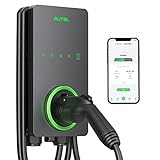
Autel MaxiCharger AC Lite Home 50A
Best for: Maximum output per dollar in a hardwired smart charger
Jump to a section▾
A GFCI breaker on an EV circuit that trips repeatedly is one of the more frustrating charging problems, partly because there are two very different causes with opposite implications: a real fault you need to find, or nuisance tripping from an interaction between protective devices.
Both are solvable. Neither is solved by removing the protection.
What a GFCI actually detects
Ground-fault circuit interrupters compare current going out with current coming back. If they don't match, current is leaking somewhere it shouldn't — potentially through a person — and the device opens the circuit fast.
This is a different function from a breaker's overcurrent protection. A standard breaker trips on too much current; a GFCI trips on imbalanced current, even a small amount.
That sensitivity is the point, and it's also why GFCIs are more prone to nuisance operation than standard breakers.
Why EV circuits have this problem specifically
Two things collide.
1. EVSE already has ground-fault protection built in. It's part of what makes an EV connector safe to handle in the rain. Listed EVSE includes its own ground-fault detection at a threshold appropriate for the application.
2. Recent NEC editions generally require GFCI protection for 240V dwelling receptacles. So a plug-in charger on a NEMA 14-50 typically gets a GFCI breaker upstream of an EVSE that has its own protection.
Two ground-fault devices in series, with different thresholds and response characteristics, on a circuit carrying high current for hours. Small normal leakage currents that neither device would trip on alone can add up, and the upstream breaker sometimes operates when nothing is actually wrong.
This is a well-known interaction, not a defect in either product.
Diagnose by pattern
The when tells you the why:
| Pattern | Likely cause |
|---|---|
| Trips at the very start of every session | Inrush interaction, or a fault that appears under load |
| Trips randomly, mid-session | Classic nuisance tripping, or an intermittent fault |
| Only when raining or after washing the car | Moisture — connector, receptacle or enclosure |
| Only in very cold or very hot weather | Moisture ingress or thermal issue |
| Started after new work or a new charger | Something in that work — wiring or equipment |
| Trips with any load, not just charging | Wiring fault upstream of the charger |
| Trips immediately even unplugged | Fault in the circuit itself |
Write down what happens over a few sessions before calling anyone. The pattern is the most useful thing you can hand an electrician.
Real causes to rule out first
Before assuming nuisance tripping, check the things that are genuinely faults:
Moisture. Water in a receptacle, a connector, the charge port, or the charger enclosure. Common outdoors, and common after washing a car. Look for a missing or cracked weatherproof in-use cover on an outdoor receptacle, an enclosure rating that doesn't suit the location, or standing water where the connector rests. See outdoor EV charger installation.
Damaged cable or connector. Any compromised insulation can leak current. Inspect the whole length, especially near the handle. See charging cable damage and safety.
Wiring faults. A neutral and ground bonded where they shouldn't be, a nicked conductor, a loose termination, or a wiring error from installation. This is why "it started after the new work" is a strong clue.
A failing charger. Equipment does fail. Testing the circuit with a different unit isolates this.
A failing GFCI breaker. These wear out, especially after many trips.
The correct fixes
If it's a genuine fault: find and fix it. Moisture ingress, damaged cable, wiring error, failed equipment. A licensed electrician tests insulation resistance and checks terminations.
If it's nuisance tripping from double protection, options in order of preference:
-
Hardwire the charger. This is the cleanest fix by a wide margin. A hardwired EVSE relies on its own built-in ground-fault protection, and the receptacle GFCI requirement no longer applies. It also removes the receptacle as a moisture path and a failure point. See NEMA 14-50 vs hardwired.
-
Replace the GFCI breaker with another of the same type. Some units are more prone to this than others, and a failing breaker is a real possibility.
-
Improve the installation environment — better weatherproofing, relocating the receptacle out of a wet area, better cable management so the connector isn't sitting in water.
-
Confirm the requirement with your AHJ. Requirements differ by adopted edition and by installation type. Your electrician can confirm what applies to your specific install.
Can I remove the GFCI to stop the tripping?
Don't replace the GFCI with a standard breaker where GFCI protection is required. That's a code violation, it removes a protective device, and it will fail an inspection. It also creates an insurance problem if anything ever happens.
Don't repeatedly reset a tripping breaker without diagnosing it. If the cause is a real fault, you're resetting past a warning.
Don't work in the panel yourself unless you're qualified. Breaker replacement on a service panel is licensed-electrician work in most jurisdictions.
Preventing it at install time
If you're installing now:
- Consider hardwiring if the location is outdoors, exposed, or you want 48A anyway
- Match the enclosure rating to the location and check the operating temperature range
- Use a proper weatherproof in-use cover on any outdoor receptacle
- Mount high enough that the connector never rests in water — mounting height and placement
- Use a licensed electrician and get it permitted, so terminations and grounding are verified — EV charger permits and inspection
These are also on the general list in EV charger installation mistakes to avoid.
The bottom line
A tripping GFCI on an EV circuit is either a real fault — usually moisture or damaged insulation — or nuisance tripping from a GFCI breaker in series with the EVSE's own ground-fault protection. Diagnose by pattern, rule out moisture and cable damage first, and if it's the double-protection interaction, hardwiring is the clean fix. Never solve it by removing protection.
Size or verify your circuit with the Level 2 charger breaker size calculator, or read EV charger not charging for the broader diagnosis.
If hardwiring is the fix
Fix 1 above only works if the unit you own can be hardwired — plenty of plug-in chargers cannot. If yours is the reason the GFCI breaker is in the circuit at all, one hardwired unit to replace it with:
We earn a commission if you buy through links on this page, at no extra cost to you. It does not change what we recommend — see our affiliate disclosure. As an Amazon Associate I earn from qualifying purchases.
Smart charger
Autel MaxiCharger AC Lite Home 50A
A 12 kW hardwired smart unit with published dynamic load balancing, in J1772 and NACS versions.
Best for: Maximum output per dollar in a hardwired smart charger
- Max output
- 50 A / 12 kW, hardwired only
- Adjustable
- 6–50 A
- Connector
- J1772 or NACS versions
- Cable
- 25 ft
- Enclosure
- NEMA 4X, indoor/outdoor
- Smart
- Wi-Fi + Bluetooth, Autel Charge app, scheduling, monitoring
- Load management
- Dynamic load balancing (published for the 50 A tier)
- Listing
- CSA certified, Energy Star
- Warranty
- 3 years
- Full 12 kW output and 6–50 A adjustability at an aggressive price
- NEMA 4X enclosure — the best weather rating in the group
- Published dynamic load balancing at this tier
- Hardwired only in the 50 A version — the 40 A plug-in sibling is J1772-only
- Smaller US support footprint than the household names
More options in every size are in the Level 2 charger picks.
Related: EV charger keeps tripping the breaker.
Code reference
The requirements behind this guide, for looking up in your adopted edition:
- NEC 625.54 — GFCI protection required for EVSE receptacle outlets
- NEC 210.8 — GFCI protection for personnel
Code editions and local amendments vary by jurisdiction. Confirm the adopted edition with your AHJ before relying on any specific article.
Frequently asked questions
Ask AI about this
Open an AI assistant with a question grounded in this page.