
Outdoor EV Charger Installation: What to Know
Updated 2026-08-16 · 7 min read
Gear this guide recommends
We earn a commission if you buy through links on this page, at no extra cost to you. It does not change what we recommend — see our affiliate disclosure. As an Amazon Associate I earn from qualifying purchases.
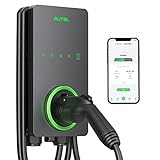
Smart charger
Autel MaxiCharger AC Lite Home 50A
Best for: Maximum output per dollar in a hardwired smart charger
Jump to a section▾
The electrical design for an outdoor charger is the same as indoors — a dedicated 240V circuit sized at 125% of the continuous load. What changes is everything around it: the enclosure, the conduit, the receptacle cover, the mounting, and how the cable behaves in February.
What does outdoor EV charger installation involve?
| Requirement | Why |
|---|---|
| NEMA 4 or 4X enclosure on the charger | Rain, snow, hose spray, and salt near coastal or road-salt areas |
| Weatherproof in-use cover on any receptacle | An ordinary flip cover is not rated with a cord plugged in |
| GFCI protection for a receptacle install | Required for EVSE receptacle outlets under NEC 625.54 |
| UV- and weather-rated conduit on exposed runs | Ordinary PVC embrittles in sunlight |
| Burial-rated cable or conduit for underground runs | Direct burial has its own depth and type rules |
| Mounting height around 42–48 in | Keeps the connector out of standing water and snow |
| Drip loop on the cable | Keeps water running away from the connector, not into it |
A hardwired charger sidesteps the receptacle GFCI requirement and removes the outlet as a moisture path — which is why it is usually the better outdoor choice. See GFCI tripping on an EV charger.
What NEMA rating does an outdoor charger need?
The single most important spec for an outdoor install is the enclosure rating. Manufacturers publish a NEMA enclosure type (and often an IP code) describing what the housing survives.
For an exposed outdoor mount you need a rating for wet locations — protection against rain, sleet, and hose-directed water, not merely dripping. An indoor-rated unit installed outdoors is an improper installation no matter how good the product is.
Check two things on the datasheet:
- Enclosure type — rated for outdoor wet locations
- Operating temperature range — both ends
That second one catches people in cold climates. Some units specify a minimum operating temperature warmer than a northern winter night. Below it, the manufacturer doesn't guarantee behavior. Cold-weather EV charging covers what winter does to charging generally.
Should an outdoor charger be hardwired?
A plug-in charger outdoors means an outdoor NEMA 14-50 receptacle, which brings requirements of its own:
- A weatherproof in-use (bubble) cover that stays protective with the cord plugged in
- Under recent NEC editions, generally GFCI protection for 240V dwelling receptacles — your adopted edition governs
- A connection point exposed to moisture and temperature cycling for years
A hardwired charger eliminates the receptacle. There's no plug to corrode, no cover to crack, and the EVSE's own ground-fault protection is built in. It's also harder to walk off with.
The tradeoff is permanence — you can't unplug it and take it when you move. Full comparison in NEMA 14-50 vs hardwired.
Getting power to the location
Outdoor installs usually mean a longer run from the panel, and often a run that leaves the building.
Above ground on an exterior wall: conduit rated for the location and for sunlight exposure where applicable, with proper supports and weatherproof fittings.
Underground to a detached garage, pedestal or driveway post: trenching, a wiring method suitable for the environment, and minimum cover depth per the NEC. Depth requirements vary by wiring method and by what's above — a driveway has different requirements than a lawn. Your electrician sizes this, pulls the permit, and calls in utility locates before digging.
Voltage drop matters on long runs. A run that's electrically fine at 50 feet may need larger conductors at 150 feet to keep voltage drop reasonable at 40–48A continuous. EV charger conduit and wire runs covers this, and detached garage EV charging covers the specific case of a separate structure — which has its own feeder, grounding and disconnect requirements.
Mounting: height, position, protection
Height. Mount so the connector is easy to reach and the cable hangs without dragging on the ground. Standing water and road salt are hard on connectors left lying in them. EV charger mounting height and placement has the details.
Physical protection. If the charger is anywhere a vehicle could contact it — a garage bay end wall, a driveway post, a parking area — protect it. A bollard is the usual answer and inspectors often want to see one where vehicle impact is plausible.
Sun exposure. A charger in full afternoon sun runs hot, which is hard on electronics and can cause the unit to derate. North-facing or shaded placement is a free reliability upgrade.
Snow and drainage. Don't mount where snow slides off a roof onto the unit, where a plow throws snow, or where water pools.
Cable management outdoors
The cable takes the most abuse in an outdoor install:
- Never leave the connector on the ground. Water, grit and salt get into the pins. Use the holster; add a wall hook if the cable is long.
- Cold makes cable stiff. A long cable that coils neatly in July can be unmanageable in January. Weigh that when choosing length — see EV charger cable length.
- Don't route across a driveway where it gets driven over, or across a walkway where it's a trip hazard.
- Inspect periodically for jacket damage, especially near the handle. Charging cable damage and safety covers what to look for.
How do you stop someone using your outdoor charger?
Two different concerns:
The charger itself. Hardwired units are meaningfully harder to remove than plug-in ones. Mounting in a lit, visible location helps. Some units accept a locking bracket.
Access to your electricity. A driveway charger is reachable by anyone. Chargers with access control — RFID, app authorization, or a simple physical lock — solve this. So does a lockable connector holster. Smart vs standard EV chargers covers where access control lives.
Most vehicles also lock the connector to the car during a session, so an in-progress charge can't be casually unplugged.
Permits, inspection and locates
An outdoor install is permitted work in most jurisdictions, same as indoors, and the outdoor elements are exactly what an inspector will look at: enclosure rating, cover type, conduit method, burial depth, bonding and grounding, and physical protection.
If you're trenching, call the national 811 locate service before digging. It's free, it's required in practice everywhere, and hitting a gas or communications line is a very bad day.
EV charger permits and inspection covers the process, and hiring an electrician covers what to ask for in a quote.
What does an outdoor charger installation cost?
More than the indoor case, the cost is in the path:
- Distance from the panel — the dominant factor
- Trenching — length, soil, and whether it crosses hardscape
- Restoring hardscape — cutting and patching a driveway or walkway is expensive
- Larger conductors for voltage drop on long runs
- A pedestal or post if there's no wall to mount on
- A subpanel if it's a detached structure
Estimate with the home charger install cost calculator and read EV charger installation cost for what moves the number.
The bottom line
Outdoors, the circuit math is unchanged but everything around it tightens: a wet-location enclosure rated for your winter, hardwiring to avoid an exposed receptacle, proper conduit and burial depth, physical protection from vehicles, and disciplined cable management. Get those right and an outdoor charger is just as reliable as one in a garage.
Size the circuit with the Level 2 charger breaker size calculator, estimate the job with the home charger install cost calculator, or read preparing your home for an EV charger.
A hardwired unit for an exposed mount
The argument above lands on hardwiring: no receptacle, no in-use cover, no plug sitting in weather for a decade. One hardwired unit that fits an outdoor install:
We earn a commission if you buy through links on this page, at no extra cost to you. It does not change what we recommend — see our affiliate disclosure. As an Amazon Associate I earn from qualifying purchases.
Smart charger
Autel MaxiCharger AC Lite Home 50A
A 12 kW hardwired smart unit with published dynamic load balancing, in J1772 and NACS versions.
Best for: Maximum output per dollar in a hardwired smart charger
- Max output
- 50 A / 12 kW, hardwired only
- Adjustable
- 6–50 A
- Connector
- J1772 or NACS versions
- Cable
- 25 ft
- Enclosure
- NEMA 4X, indoor/outdoor
- Smart
- Wi-Fi + Bluetooth, Autel Charge app, scheduling, monitoring
- Load management
- Dynamic load balancing (published for the 50 A tier)
- Listing
- CSA certified, Energy Star
- Warranty
- 3 years
- Full 12 kW output and 6–50 A adjustability at an aggressive price
- NEMA 4X enclosure — the best weather rating in the group
- Published dynamic load balancing at this tier
- Hardwired only in the 50 A version — the 40 A plug-in sibling is J1772-only
- Smaller US support footprint than the household names
More options in every size are in the Level 2 charger picks.
Code reference
The requirements behind this guide, for looking up in your adopted edition:
- NEC 625.54 — GFCI protection for receptacle outlets serving EVSE
- NEC 406.9(B) — wet-location receptacles and in-use covers
Code editions and local amendments vary by jurisdiction. Confirm the adopted edition with your AHJ before relying on any specific article.
Frequently asked questions
Ask AI about this
Open an AI assistant with a question grounded in this page.